

Skin Deep directed by Adarsh Reddy
28 February 2026
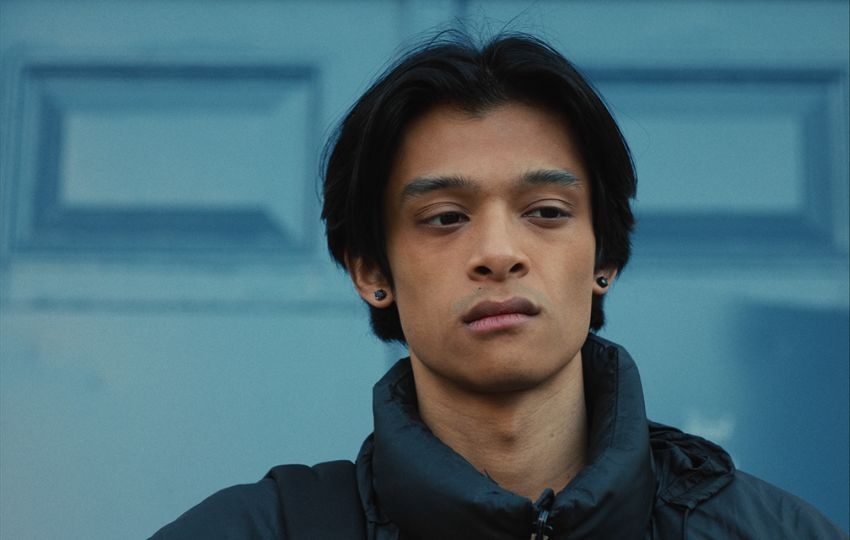
Skin Deep started with a question I couldn't shake: how much of who I became was genuinely mine, and how much was armor?
Growing up the son of immigrant parents from Hyderabad, I navigated predominantly white communities in Texas and outside Boston. I worked hard to distance myself from other Indian kids, curated who I was around. Later, in college, came the piercings and tattoos — and the same question underneath all of it. It took years to sit with the honest version of that story. Skin Deep is that reckoning.
The film follows Abhirup, an Indian American high school senior, through one pivotal day in 2008. He has a fresh lotus tattoo he tells his classmates is a weed leaf. His cousin, who he has to carpool to school, becomes a foil to everything he is trying to hide about himself. By the end of the day, he gets the acceptance he chased and realizes it means nothing.
I assembled a team that understood this world from the inside. Producer Rhea Dudani, a Tisch-trained filmmaker with credits on HBO and Netflix, kept the production moving with the kind of focus that lets a director stay inside the work. Cinematographer Mika Hawley, whose work has screened at SXSW and Outfest, shot the film in Queens with an intimacy that keeps the camera close to Abhirup without ever letting him off the hook. Editor Will Mayo, whose credits include work that has screened at Sundance and Berlinale, shaped the film's rhythms with precision. Composer Ali Helnwein, whose scores appear across Netflix and HBO, gave the film a sound that sits with the discomfort rather than resolving it.
Skin Deep does not explain or educate. It drops you into the micro-moments: the smell in a classroom, the way someone hides what they brought for lunch, the quiet betrayals we commit just to belong. The specificity is the point.



.jpg)



.jpg)

.jpg)








.png)